Quick Summary
- Behavioural consultation means working with a BCBA-supervised specialist to understand why your child behaves the way they do — and building a plan to address it.
- Behavioural therapy puts that plan into action through structured sessions, parent coaching, and school collaboration.
- KidStart offers both in Burnaby — BCBA-supervised behaviour consultants and interventionists working directly with your child and family.
- BC Autism Funding (up to $22,000/year for children under 6) covers these services. Most families pay little or nothing out-of-pocket.
- KidStart has published a free parent resource hub with six in-depth guides on behaviour, ABA therapy, and what support actually looks like in BC.
Behavioural Consultation in Burnaby: What It Is and Why Families Seek It
Managing challenging behaviour at home — the meltdowns, the aggression, the complete falling apart over a changed routine — is exhausting. Most parents who call KidStart aren't sure if what they're seeing is "normal" or something that needs professional attention. They just know they're tired, and their child is struggling.
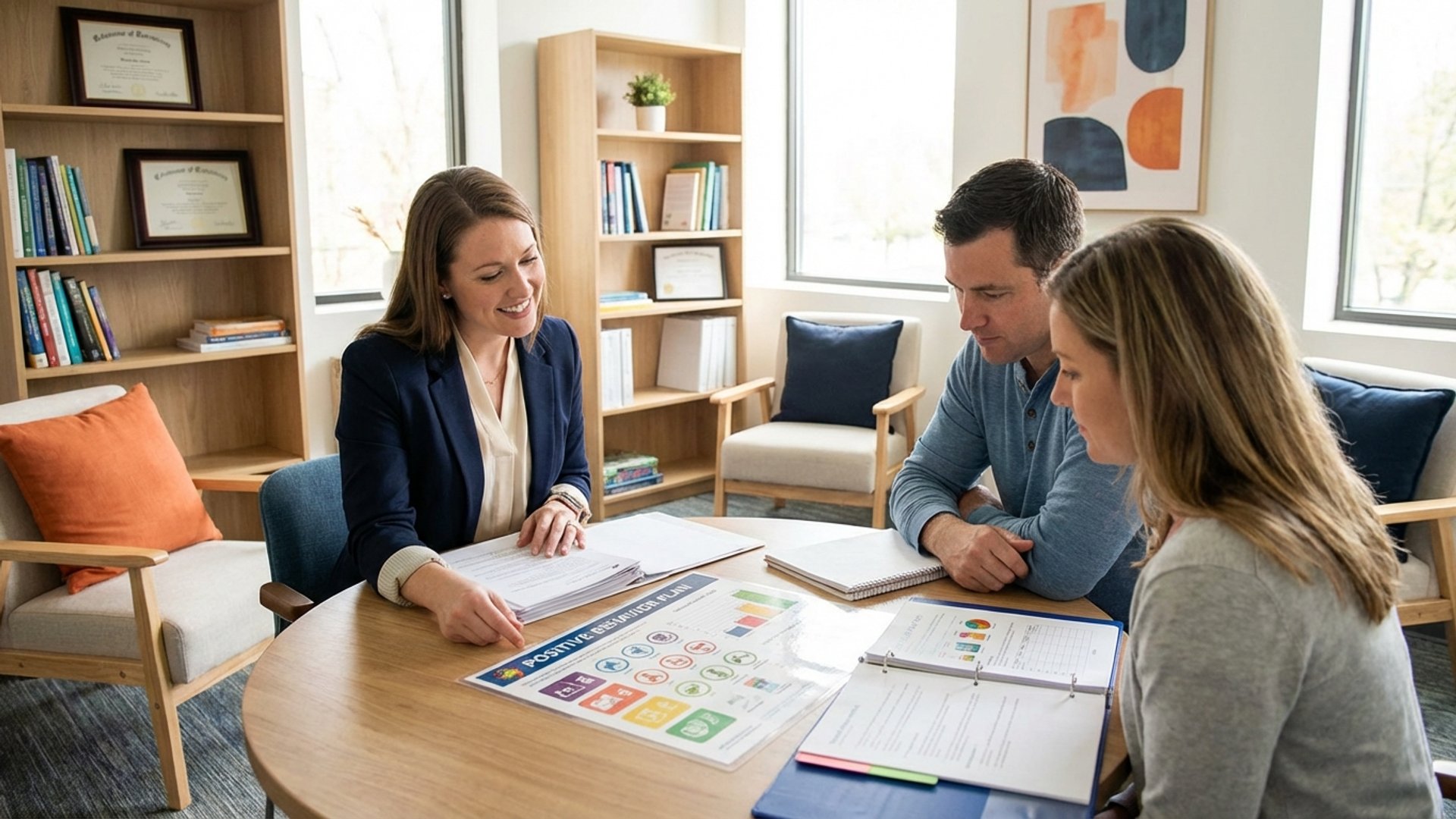
Behavioural consultation is the starting point. Before any therapy begins, a qualified behaviour specialist works with your family to understand what's happening: what triggers the behaviour, what function it serves for your child, and what the environment looks like at home, at school, and in the community. That understanding becomes the foundation for a written behaviour plan — one that's specific to your child, not a generic template.
At KidStart, behavioural consultation is provided by registered behaviour consultants (RBCs) working under the direct supervision of a Board Certified Behavior Analyst (BCBA). Our full approach is outlined on our behaviour intervention and therapy service page.
Behavioural Therapy vs. Behavioural Consultation: What's the Difference?
These two terms are related but not the same, and the distinction matters when you're trying to figure out what your child actually needs.
Behavioural Consultation
Consultation is the assessment and planning stage. A BCBA or RBC meets with your family, observes your child, conducts a Functional Behaviour Assessment (FBA), and produces a written Behaviour Support Plan (BSP) or Individualized Behaviour Plan (IBP). The consultant also coaches you — the parent — on how to implement strategies consistently at home.
Consultation is typically billed at a lower intensity than direct therapy. It's the right starting point for families who are unsure of the level of support their child needs, or who want to improve things at home before committing to a full intervention program.
Behavioural Therapy
Therapy is the direct implementation phase. A behaviour interventionist (BI) or junior behaviour consultant (JBC) works one-on-one with your child — in clinic, at home, or at school — running the strategies and programs that the BCBA designed. Sessions are structured, goal-directed, and data-driven. Progress is tracked at every session and the plan is updated as your child develops.
For a full breakdown of both, see our guide to behavioural consultation in Burnaby.
Signs Your Child May Benefit from Behavioural Consultation
Not every challenging behaviour requires a referral. But there are patterns that consistently show up in children who benefit significantly from professional support:
- Meltdowns that are frequent (daily or multiple times per week), prolonged (20+ minutes), or escalate to self-injury such as head banging, biting, or scratching.
- Aggression toward family members, peers, or teachers that doesn't respond to standard discipline or redirection.
- Extreme rigidity — a child who cannot cope with even minor changes to routine and becomes genuinely dysregulated, not just upset.
- Self-injurious behaviour of any kind. Head banging in particular is one of the most common referral reasons — and one of the most treatable with proper behaviour support.
- Regression — a child who has lost skills they previously had, particularly in language or social interaction.
- Behaviours that are affecting the family's daily functioning: siblings afraid at home, parents unable to take the child to public places, school reporting daily incidents.
If you're seeing two or more of these, our guide on 5 signs your child may need a behaviour interventionist walks through each pattern in detail — including what to do next.
How Behavioural Therapy Works: ABA, PBS, and What KidStart Actually Does
The most common question parents ask when they hear "behavioural therapy" is: is this ABA? And the honest answer is: yes, our approach is ABA-informed — but what that means in practice in 2025 is very different from what ABA looked like in the 1970s and 80s.
Applied Behaviour Analysis (ABA)
ABA is the scientific framework underlying most evidence-based behaviour therapy. It focuses on understanding the relationship between behaviour and environment: what triggers a behaviour (antecedents), what the behaviour looks like (the behaviour itself), and what happens afterward that maintains it (consequences). The landmark Lovaas study (1987) showed that intensive ABA therapy resulted in significant developmental gains in 47% of children with autism — a finding that established ABA as the gold-standard intervention.
More recent meta-analyses have reinforced this. A 2010 Cochrane-style review by Virués-Ortega found that comprehensive ABA interventions produced strong gains in language, intellectual functioning, and adaptive behaviour. The American Academy of Pediatrics endorses ABA as the most evidence-based intervention for autism spectrum disorder.
Positive Behaviour Support (PBS)
PBS builds on ABA principles but places stronger emphasis on understanding the communicative function of behaviour — the idea that all behaviour is communication — and on building skills that replace challenging behaviours rather than simply suppressing them. Research by Carr et al. (1999) demonstrated that PBS approaches reduce challenging behaviours by up to 80% when implemented with fidelity. KidStart's consultants are trained in PBS as a core component of their clinical approach.
What KidStart's Behaviour Consultants Actually Do
At KidStart, behavioural consultation and therapy is not a rigid protocol. Every child gets an assessment, a written plan, and direct intervention that's built around their specific goals — communication, emotional regulation, self-care, social skills, or reducing specific challenging behaviours. Parent coaching is included in every plan because what happens between sessions matters as much as the sessions themselves.
For a plain-language explanation of the full process, read what is behaviour intervention for children: a guide for BC families.
Common Behaviours We Address at KidStart
Head Banging
Head banging is one of the most alarming behaviours for parents to witness — and one of the most common referral reasons for behaviour consultation. Research shows that self-injurious behaviour occurs in 10–15% of children with intellectual disabilities (Matson et al., 2012). The behaviour almost always has a communicable function: sensory seeking, pain communication, frustration, or attention. Our guide to head banging and behaviour therapy in Burnaby covers the causes, red flags, and how a behaviour consultant approaches assessment and intervention.
Toddler Tantrums and Meltdowns
There's a meaningful clinical difference between a typical toddler tantrum and a meltdown that requires professional support. When tantrums happen multiple times per day, last longer than 25 minutes, or involve aggression or self-injury, that's outside the range of typical development. Our guide to toddler tantrums and behaviour intervention explains how behaviour consultants identify the function of meltdowns and build intervention plans around them.
Stimming, Repetitive Behaviours, and Tics
Stimming (self-stimulatory behaviour) is common in autistic children and is not always something that needs to be reduced — but when it's interfering with learning, social connection, or safety, behaviour support can help. Research indicates stimming or repetitive behaviours occur in 30–80% of autistic children (Leekam et al., 2011). Our guide to repetitive behaviours, stimming, and tics in BC children covers how to tell the difference, when to seek support, and what OT and behaviour therapy can offer.
ABA Therapy in Burnaby: What to Expect
Parents who are new to the system often don't know what "ABA therapy" actually looks like when you walk into a clinic. Is it drills? Flashcards? Hours of repetitive tasks? At KidStart, ABA-informed therapy is play-based, child-led, and built around your child's interests. For a detailed overview of how it works and what the intake process looks like, read our ABA therapy Burnaby parent's guide.
One of the most important things to know: in BC, you don't have to wait for a formal autism diagnosis to access behavioural consultation. Many families come to KidStart while they're still on a waitlist for assessment. A behaviour consultant can begin working with your child based on the presenting behaviours — the diagnosis doesn't change the intervention approach at the early stages.
Funding Behavioural Consultation and Therapy in BC
One of the biggest barriers families face is not knowing that these services are substantially funded by the BC government. Most KidStart families pay little or nothing out-of-pocket for behavioural consultation and therapy.
BC Autism Funding Program
BC's Autism Funding Program (AFP) provides up to $22,000 per year for children under six, and up to $6,000 per year for children ages 6–18. This funding is specifically designed to cover services like behavioural consultation, ABA therapy, and behaviour intervention. It is not means-tested — it's available to every eligible child with a confirmed ASD diagnosis.
Children and Youth with Support Needs (CYSN) Funding
The BC government's CYSN framework provides additional funding streams for children with developmental delays, even without an autism diagnosis. Behavioural consultation services may be covered depending on your child's profile and assessed needs.
For a complete breakdown of every BC funding option available for behavioural therapy — including how to apply, what's covered, and what to do if your child doesn't have a diagnosis yet — see our BC funding guide for families.
KidStart's Free Behaviour Resource Hub for BC Families
KidStart's clinical team has published six in-depth, evidence-based guides specifically for BC parents who are trying to understand what they're seeing in their child's behaviour and what their options are. These are not promotional — they're clinical resources written to answer the questions parents actually ask.
- ABA Therapy in Burnaby, BC: A Parent's Guide to Getting Started — how ABA works, what sessions look like, and how to access funding.
- 5 Signs Your Child May Need a Behaviour Interventionist — the clinical patterns that consistently predict who benefits from professional support.
- What Is Behaviour Intervention for Children? A Plain-Language Guide — a jargon-free walkthrough of what a behaviour plan actually involves.
- Why Children Bang Their Head: Behaviour Therapy Options in Burnaby — causes, red flags, and treatment pathways.
- How Behaviour Intervention Helps Toddlers with Extreme Tantrums — when to seek help and what the intervention process looks like.
- Repetitive Behaviours, Stimming, and Tics in Children: A BC Parent's Guide — understanding the difference and knowing when OT or behaviour support is appropriate.
What to Expect at Your First Behavioural Consultation
One of the biggest barriers to seeking support is not knowing what the process actually looks like. Here is what a typical intake and first consultation at KidStart involves.
Step 1: Intake Call (15 Minutes, Free)
A member of our team calls you to ask about your child's age, the specific behaviours you're seeing, and whether you have a current diagnosis or funding. This is not a clinical call — it's a fit conversation. We want to make sure KidStart is the right match before you commit any time or money.
Step 2: Initial Assessment
Your first booked appointment is an assessment session, usually 60–90 minutes. The BCBA or RBC will meet with you and your child, observe how your child interacts and responds, review any existing reports (school, pediatrician, diagnostic), and complete a structured Functional Behaviour Assessment (FBA) or intake screening.
The FBA is the core clinical tool in behavioural consultation. It looks at three things: what happens right before a challenging behaviour (antecedents), what the behaviour itself looks like (topography, frequency, intensity), and what happens after the behaviour that might be reinforcing it (consequences). Understanding this A-B-C pattern is what allows a consultant to design an intervention that actually works — rather than treating symptoms without addressing cause.
Step 3: Written Behaviour Plan
Within 1–2 weeks of the assessment, you receive a written Behaviour Support Plan (BSP) or Individualized Behaviour Plan (IBP). This document specifies: what behaviours are being targeted, what the intervention procedures are, what your role as a parent is, and how progress will be measured. Nothing happens without your review and sign-off.
Step 4: Direct Therapy and Parent Coaching
Once the plan is in place, direct therapy begins. Sessions happen at the clinic, at home, or at school depending on the child's needs and where the behaviours are most challenging. Parent coaching sessions run in parallel — because the best behaviour plans in the world don't work if the strategies aren't being implemented consistently across all settings. Research from Singer (2006) found that family stress levels decrease significantly when parents receive structured coaching alongside their child's behaviour therapy, not just at the start but throughout the process.
Step 5: Progress Monitoring and Plan Updates
Every session generates data. Behaviour consultants record frequency, duration, and intensity of target behaviours at every session. The BCBA reviews this data weekly and adjusts the plan as needed. Families receive regular progress updates and are involved in any significant changes to the approach. This is not a set-and-forget service — the plan evolves as your child does.
Frequently Asked Questions
What is the difference between a behavioural consultant and a BCBA?
A BCBA (Board Certified Behavior Analyst) is the highest qualification in the field — a master's-level clinician who is board-certified to design behaviour plans, supervise clinical staff, and conduct assessments. A behavioural consultant (also called an RBC, JBC, or BI depending on their training level) works under BCBA supervision to implement those plans directly with your child. At KidStart, every behaviour plan is designed and overseen by a BCBA, with direct therapy delivered by trained behaviour consultants.
Do I need a diagnosis before accessing behavioural consultation?
No. In BC, you do not need a formal autism or ADHD diagnosis to begin behavioural consultation. Families can self-refer to KidStart. The behaviour consultant will assess your child based on the presenting behaviours, and a plan can begin while you wait for a diagnostic assessment. If your child does receive a diagnosis, BC Autism Funding can then be applied retroactively to cover ongoing services.
How long does behavioural therapy take to show results?
Most families notice meaningful changes within 8–12 weeks of consistent implementation — at the clinic, at home, and at school. Research suggests that early, intensive intervention (before age 5) produces significantly stronger outcomes than intervention that begins later. That said, even children who start therapy at age 8 or 10 show real gains. The key variable is consistency, not age.
Is ABA therapy the same as behavioural therapy?
ABA (Applied Behaviour Analysis) is one type of behavioural therapy — and the most evidence-based one for autism. At KidStart, our approach is ABA-informed but also draws on Positive Behaviour Support (PBS) and cognitive-behavioural strategies depending on the child's age, diagnosis, and specific goals. We don't use a single protocol for every child.
How do I get started with behavioural consultation at KidStart?
The first step is a free 15-minute intake call. You can book directly on our website or call the clinic at (604) 336-6885. Visit our contact page to get started. Our intake team will walk you through what to expect, confirm your funding eligibility, and match your child with the right clinician.
Getting Started
Behavioural consultation and behavioural therapy are not last-resort options — they're early-intervention tools that work best when started before patterns become entrenched. If you're seeing challenging behaviour at home or school and wondering whether it's something that warrants professional support, the answer is usually yes, it's worth a conversation. KidStart offers a free intake call precisely for that reason. Book here or call (604) 336-6885.
If you're still in the research phase, our BC funding guide is the best place to start — it covers every program available to BC families and exactly how to access them.