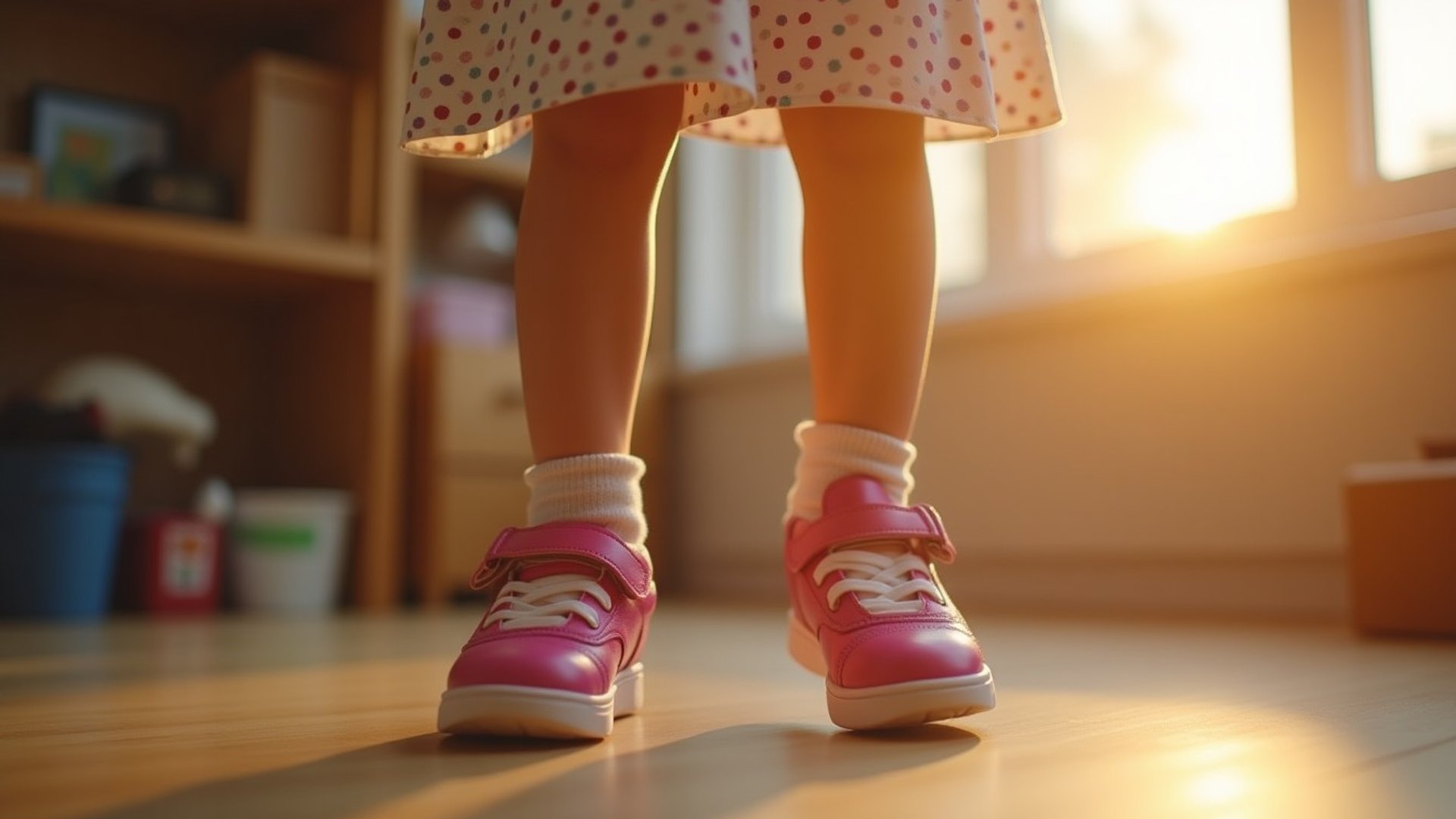
Developmentally appropriate preschooler footwear is a category of children's shoes that prioritizes flexible soles, wide toe boxes, and materials that allow natural foot movement during the critical growth window in the preschool years. The right shoe for a preschooler supports sensory feedback and muscle development — not brand recognition or adult-style support structures.
- The best shoes for preschoolers aren't about brand. They're about flexible soles, wide toe boxes, and materials that let growing feet move naturally.
- Stiff shoes block the sensory feedback preschoolers need to build balance and coordination.
- Kids who walk on their toes, trip frequently, or refuse shoes may have needs beyond footwear. An OT assessment can clarify what's happening.
- Shoe sizing errors are common. Leave sufficient space between the longest toe and the shoe's tip. Also check width, not just length.
- For children with autism, ADHD, or sensory sensitivities, seams, tags, and stiff materials can make shoe-wearing genuinely painful. It's not just uncomfortable.
Why Do Shoe Choices Affect Your Preschooler's Development — Not Just Their Feet?
Your child's feet are still growing and developing through the preschool years.
That matters more than most parents realize.
The feet are where your child's body touches the ground. Every step sends sensory information up through the nervous system. This information tells your child's brain where they are in space. Scientists call this proprioception.
When shoes are too stiff or too thick, that feedback gets blocked. The brain receives less information. Balance suffers. Coordination takes longer to develop.
A 2011 systematic review in the Journal of Foot and Ankle Research (Wegener et al.) found that shoes change how children walk: with shoes, children take longer steps, and their feet move less, including less big-toe motion and less forefoot widening.
This isn't about brand preference. It's about what shoes do to developing feet — and choosing accordingly.
What Makes a Shoe Developmentally Appropriate for a Preschooler?
Ask a pediatric OT what they look for in preschooler footwear. You'll get a checklist, not a brand recommendation.
Here's what matters:
Flexible sole. Twist the shoe. Bend it. It should flex easily at the ball of the foot. A stiff sole stops the foot from moving through its full range of motion with each step.
Thin, flat sole. Raised heels shift a child's weight forward, which changes posture and how they walk. Preschoolers need a flat, even platform.
Wide toe box. Children's toes are designed to spread. A narrow toe box squeezes the foot bones and restricts the natural toe-spread that helps with balance.
Lightweight build. Heavy shoes tire small legs. They also take more muscle power to lift. That power should go toward play and learning instead.
Minimal arch support. This surprises many parents. Preschool-aged feet are often flat, and arches develop over time. Most children with flexible flat feet outgrow them, and no treatment is needed if there is no pain (American Academy of Orthopaedic Surgeons).
Secure fastening. Velcro or elastic works best for most preschoolers. Laces come later. The shoe should stay on without the child constantly pulling at it.
A classic review in Pediatrics (Staheli, 1991) concluded that the main role of children's shoes is to protect the foot, that shoe choice should be based on the barefoot model, and that the term "corrective shoes" is a misnomer.
Are Stiff Soles Bad for Preschoolers' Feet?
Yes. In most cases.
Stiff soles are made for adult working environments. They protect against hazards on factory floors, construction sites, and formal offices. These hazards don't exist in a preschool classroom or backyard.
For a preschooler, a rigid sole means:
- The foot can't move through its natural walking cycle
- The toes can't grip, push off, or spread
- Ground feedback is muffled. The foot doesn't feel what it's walking on
- The calf and foot muscles work harder to compensate. They get tired faster
What Shoe Features Do Pediatric OTs Recommend for Preschoolers?
OTs aren't podiatrists. But they work daily with children who have sensory processing differences, motor delays, and coordination challenges. Footwear is a daily tool. It either helps or gets in the way.
Ground-Feel Matters
The more sensory information the foot gathers, the better. Thin-soled shoes let children feel changes in terrain. That feedback helps the brain calibrate balance and posture in real time.
Brands such as Tsukihoshi and See Kai Run are often mentioned for thin, flexible construction and wide toe boxes. Check each shoe yourself with the bend and width tests.
Fastenings Affect More Than Convenience
A child who puts on and removes their own shoes is building fine motor skills. Velcro is the best choice at preschool age. It's manageable, secure, and builds independence.
Slip-on styles can work. But watch for heel slipping. A shoe that slides at the heel causes the child to grip their toes to keep it on. That creates its own problems over time.
Seams and Tags Are a Sensory Issue — Not a Phase
For children with sensory sensitivities, seams, tags, and rough inner linings aren't a minor annoyance. These are real physiological responses.
Sensory sensitivities are common in kids with autism, ADHD, or sensory processing disorder. Our pediatric therapy team at KidStart can help. A child who melts down over shoes isn't being difficult. They're telling you something important about how their nervous system processes sensation.
Seam-free or tagless construction isn't a luxury for these kids. It's functional gear they need.
Should Preschoolers Go Barefoot at Home?
For many children, yes, on clean and safe surfaces.
A 2017 study in Scientific Reports compared 810 children and adolescents who grew up habitually barefoot with matched peers who usually wore shoes, and found that habitual shoe use was linked to lower foot arches and smaller big-toe angles (Hollander et al., 2017).
Barefoot time lets the foot do what it's designed to do. The toes grip. The arch rises. The intrinsic muscles work. The sensory receptors in the sole fire.
Indoors on clean, safe surfaces: barefoot is better. Outdoors or on rough terrain: the right shoe protects without blocking development.
This matters especially for children working through occupational therapy goals related to sensory processing or gross motor development.
How Do You Know If Your Child's Shoes Actually Fit?
Most sizing errors happen at the toe. A thumb's width between the longest toe and the front of the shoe is a commonly recommended guideline.
But size isn't the whole story.
Width matters more than most parents check.
Standard North American shoe widths often run narrow. Children with wider feet may need wide or extra-wide sizing. This is common in children with low muscle tone or hypermobility.
Check both dimensions. Stand your child on a flat surface. Trace the foot on paper. Measure width at the widest point. This is usually across the foot bones in the middle. Compare to the shoe's internal width at that same point. If the foot trace is wider than the shoe, it doesn't fit. This is true regardless of what the label says.
Signs a shoe doesn't fit:
- Red marks on the toes or heel after wear
- Blisters forming within a few uses
- The child pulls at the shoe constantly
- Unusual walking patterns. This includes tiptoeing, wide stance, or inward rotation
Children's feet also change fast. Most preschoolers need new shoes frequently. Check the fit regularly. Don't just wait until you notice a problem.
What About Orthotics — Do Preschoolers Need Them in Their Shoes?
Rarely. This is true for typically developing children with flat feet.
Flat feet in preschoolers are common. Many children with flexible flat feet don't start developing arches until about age 5 or older (American Academy of Orthopaedic Surgeons).
The American Academy of Orthopaedic Surgeons says that if a child's flexible flatfoot does not cause pain or discomfort, no treatment is needed, and most children outgrow it.
A 2022 Cochrane review of 16 trials found no supporting evidence for costly custom orthoses in healthy children whose flexible flat feet don't hurt (Evans et al., 2022). Ask a clinician before buying inserts.
Custom orthotics are sometimes prescribed for children with specific diagnoses. This includes hypermobility, neurological conditions, or structural deformities. These always follow a formal clinical assessment. It's never just a hunch or online purchase.
If you're wondering whether your child needs orthotics, that question deserves a proper assessment. Not an online purchase.
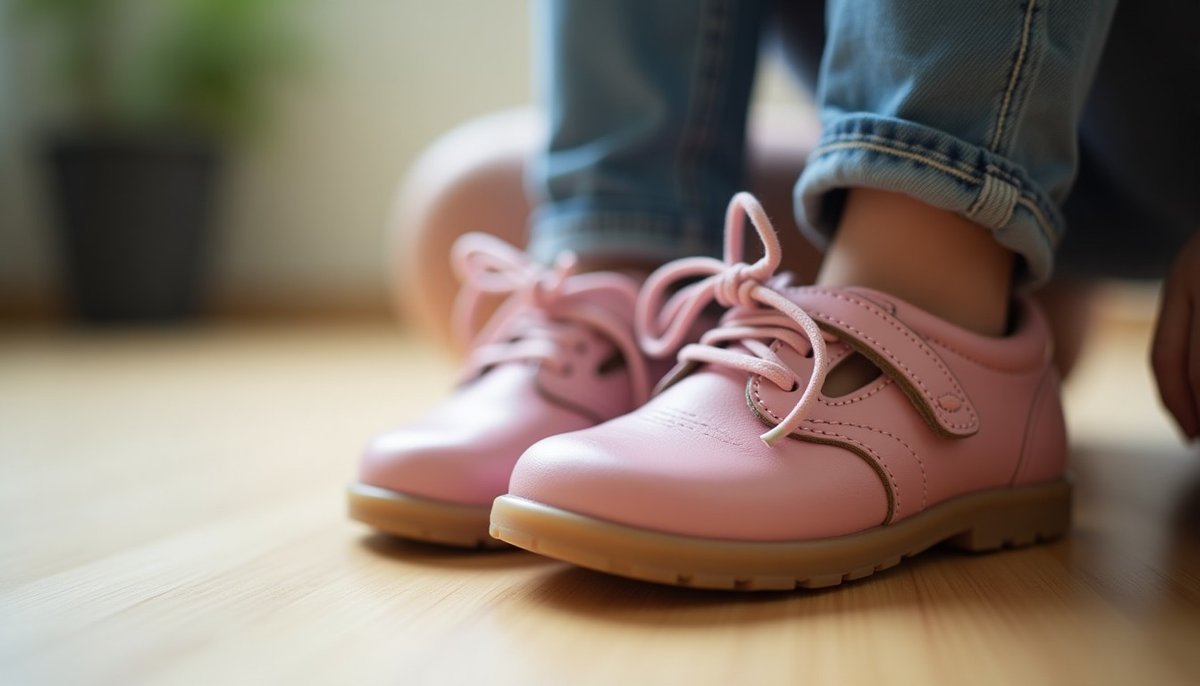
When Does the Wrong Shoe Become a Therapy Issue?
Some children have needs that go beyond what footwear can fix. Shoes are one piece. They're not the whole picture.
Watch for these signs:
Persistent toe-walking past early preschool. Some toe-walking is normal in toddlers. When it continues into the preschool years, it warrants a closer look. Possible factors include tight Achilles tendons, sensory processing differences, or autism spectrum presentations. The wrong shoes can make it worse. But they rarely cause it.
Frequent falling. All preschoolers fall. But if your child falls significantly more than peers, or struggles on uneven surfaces, there may be a balance or proprioception component worth investigating.
Refusal to wear shoes entirely. For children with sensory processing disorder, autism, or ADHD, shoe refusal isn't defiance. It's communication. The tactile input from shoes may be genuinely overwhelming. Behavioral therapy can address this systematically. It builds tolerance through structured, incremental steps.
Unusual gait patterns. In-toeing, out-toeing, scissor gait, wide-based stance — these warrant a professional look. An OT or physiotherapist can assess whether gait differences are developmental or functional.
If your child has a diagnosis of autism, ADHD, or sensory processing differences, the shoe question is often one piece of a larger picture. The KidStart team works with families to build that picture. We provide assessment, therapy, and practical guidance parents can apply at home.
What About BC Autism Funding — Can It Cover Therapy for Sensory Issues Around Shoes?
If your child has an autism diagnosis in BC, Autism Funding through the BC Ministry of Children and Family Development can pay for eligible therapy services until March 31, 2027. This includes occupational therapy that addresses sensory processing, motor development, and daily living skills like tolerating footwear.
Learn more about BC Autism Funding eligibility and how to access it through KidStart.
The program supports children and youth up to age 18 with an autism diagnosis. KidStart's autism funding page says it accepts BC government funding.
Which Shoe Features Matter Most for Preschoolers with Sensory Sensitivities?
For children with sensory processing differences, shoe shopping isn't just about fit. Here's a checklist to try:
Fabric and lining:
- Tagless or with easily removable tags
- Smooth inner lining. No textured interior panels
- Seam-free toe box, or toe seam that runs across rather than down. This is less irritating on skin
Structure:
- Flexible sole. Do the bend-test before buying
- Wide toe box
- Low profile. Sits close to the ground
- Lightweight. Test by picking it up with one finger
Fastening:
- Velcro preferred for ease and security
- No tight elastic at the ankle opening
- Adjustable width if possible
Before-purchase sensory check: Let your child handle the shoe before putting it on. Touch the lining. Feel the material. This preview reduces resistance. It also gives the child some control. Try in-store when possible. Watch their reaction to putting it on, not just to walking in it.
Brands parents often compare:
- Tsukihoshi
- See Kai Run
- Pediped
- Plae (especially their sensory-conscious designs)
These aren't endorsements. Every child is different, so test each shoe.
中文摘要:為學齡前兒童選擇合適的鞋子 / Chinese Summary for Parents
學齡前兒童的最佳鞋款——兒童職業治療師的建議
選購學齡前兒童的鞋子,不只是「合腳」那麼簡單。
兒童的足部骨骼在學齡前階段仍以軟骨為主,需要透過自然活動逐步發育。合適的鞋子應具備:
- 鞋底柔軟可彎折:讓腳感受地面反饋,幫助平衡感發育
- 寬前掌設計:讓腳趾自然展開,支持穩定行走
- 輕量設計:不讓孩子的腿部感到疲勞
- 無刺激縫線或標籤:對於感覺敏感的孩子(自閉症、ADHD或感覺處理障礙),縫線和標籤可能造成真實的身體不適
如果您的孩子出現以下情況,建議尋求職業治療(OT)評估:
- 持續用腳尖走路
- 比同齡孩子更頻繁跌倒
- 強烈排斥穿鞋
KidStart兒童康復治療中心位於Burnaby,服務大溫哥華地區,提供職業治療、言語治療及行為治療服務。如需預約評估,請致電 604-336-6885。
Book an Intake Assessment at KidStart
Shoes are one piece. If you're noticing patterns, it's worth looking at the whole child. Patterns include persistent tiptoeing, sensory refusals, balance challenges, and coordination delays.
KidStart Pediatric Therapy serves families in Burnaby, Coquitlam, and Greater Vancouver. Our registered OTs and SLPs offer comprehensive developmental assessments and evidence-based therapy. We work in a sensory gym built for kids.
Call 604-336-6885 or visit kidstartpediatrictherapy.com/services to book an intake assessment.
Your child's development isn't a guessing game. Let's get the answers you need.
Test Your Knowledge
1. What did the 2011 review cited in the article find about shoes and children's walking?
- A. Shoes have no effect on walking
- ✅ B. Shoes change how children walk, including reducing foot motion
- C. Shoes only affect running
- D. Barefoot walking is unsafe indoors
*The Wegener et al. (2011) review found that shoes change children's gait, with longer steps and less foot motion.*
2. What is the main developmental problem with stiff-soled shoes for preschoolers?
- A. They are more likely to cause blisters.
- ✅ B. They block sensory feedback needed for balance and coordination development.
- C. They are always more expensive than flexible shoes.
- D. They prevent children from running fast.
*The article explains that stiff soles prevent the foot from moving naturally and mute ground feedback, which disrupts the proprioception needed for developing balance and coordination.*
3. According to pediatric OTs, what are three physical features to look for when choosing preschooler footwear?
Flexible soles that bend easily, wide toe boxes that allow natural toe spread, and lightweight construction are three key features. A thin, flat sole without a raised heel is also important.
4. Why does the article recommend against using artificial arch support in preschooler shoes?
Flat feet are normal in young children, most children outgrow flexible flatfoot, and no treatment is needed if there is no pain.